
Bridging the Gap: Health Equity for All
Chickenpox Deaths Have Been “Practically Eliminated” by Vaccines
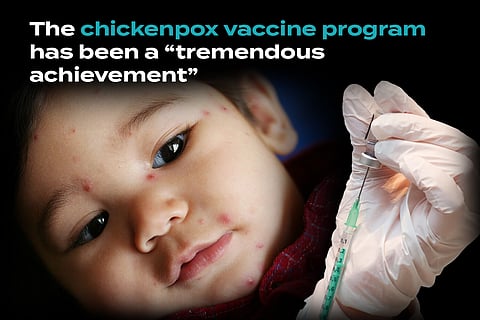
<p>A new CDC report has found that we have successfully scratched one of society’s greatest itches: the chickenpox vaccine has “practically eliminated” severe illness and deaths from the disease in children. The vaccine was first introduced in 1995, and since then, cases of the disease in the US have been slashed by 97%, hospitalizations by 94%, and deaths by 99%, according to the report.</p>
<p>These figures were found in an analysis of national databases by the CDC, and the report was published in late October.</p>
<h2>All about chickenpox</h2>
<p>This super contagious infection is caused by the varicella-zoster virus (a type of herpes virus that is also responsible for shingles), and it used to be extremely common in the US. Chickenpox symptoms first appear roughly 10 to 21 days after exposure: headaches, muscle soreness, nausea, and a cough are all common.</p>
<p>The next stage is when the blistering rash shows up, typically starting on the face and then spreading to the rest of the body. The fluid-filled blisters appear bright, symmetrical, and almost transparent (hence, why some refer to the rash as a “dew drop on a rose petal”).</p>
<figure><img alt="Child with chickenpox" src="https://cdn.storymd.com/optimized/kAvRrQHeA1/thumbnail.jpg" />
<figcaption>Child with chickenpox. <em> Source: Phyllis Buchanan from Glasgow, Scotland/Wikimedia</em></figcaption>
</figure>
<p>Your body’s immune system needs a good week or two to get the infection under control, but once you’ve gone through it, you’re in the clear. It’s mostly a childhood disease but anybody who isn’t vaccinated or hasn’t had it before is at risk.</p>
<p>The sores look the same on adults as they do on kids, but adult cases can be much more serious. They have an increased likelihood of experiencing complications like pneumonia or encephalitis (swelling of the brain).</p>
<p>Certain types of people are especially vulnerable including pregnant women and the immunocompromised. Maternal infection can harm newborns by causing blindness, deafness, deformed limbs, and possibly even death. </p>
<p>Touching and breathing are the main routes of transmission, but it can also transfer through droplets of saliva expelled through talking. Naturally, chickenpox flies through school environments given its ease of transmission in close contact.</p>
<p>Before the introduction of the vaccine in 1995, chickenpox was thought to be just a part of growing up. So-called “chickenpox parties” were common events where parents would organize playdates with other families’ kids if someone had the virus so their kid could get it over with. </p>
<p>“It’s a terrible idea,” said Tara Smith, a professor of epidemiology at Kent State University in Ohio. “We have a better way to prevent chickenpox now, so why put your child through that?”</p>
<p>As much as health experts have emphasized the safety and efficacy of the chickenpox vaccine, there are still some parents who opt for the old-fashioned method of a pox party. This is usually with parents with anti-vaccine views. </p>
<p>The vaccine is intentionally weaker — it contains a lower dose of the virus compared to the natural version that runs wild. Pneumonia, toxic shock syndrome, and hepatitis are all possible complications of opting for natural immunity through infection, and although small, there is also a risk of death. </p>
<p>Once you’ve had chickenpox, the virus stays in your body for life, and in some people, the virus reactivates down the road and causes shingles. Your odds of getting shingles later in life are higher if you contract chickenpox naturally.</p>
<p>“It is not worth taking the chance of exposing your child to someone with the disease. The best way to protect infants and children against chickenpox is to get them vaccinated,” according to the CDC.</p>
<figure><img alt="Varicella-zoster and shingles" src="https://cdn.storymd.com/optimized/RdagBwCXAl/thumbnail.jpg" />
<figcaption>(a) Varicella-zoster, the virus that causes chickenpox (b) shingles, often exhibiting a rash. <em> Source: (credit a: modification of work by Dr. Erskine Palmer, B. G. Martin, CDC; credit b: modification of work by “rosmary”/Flickr; scale-bar data from Matt Russell) </em></figcaption>
</figure>
<h2>“A tremendous achievement” </h2>
<p>Back in the early ‘90s, around 4 million were infected each year, and of these, 10,500–13,000 were hospitalized, and between 100 and 150 died. Most of the burden, however, was shouldered by kids: 90% of cases; two-thirds of hospitalizations; and roughly half of the deaths involved children.</p>
<p>A little over a quarter century after the launch of the chickenpox vaccine program, those numbers have collapsed, as evidenced by the new CDC report. </p>
<p>According to the lead author of the study, Mona Marin, there are now only around 150,000 cases per year, and the vaccine program saves the country upwards of $1 billion every year in related medical costs and lost productivity. Around 100–200 pregnant women used to land themselves in the hospital each year because of a chickenpox infection, but in 2018 and 2019, there were only 3 or 4 such cases.</p>
<p>The biggest decline was observed in those under 20, people who were born in the middle of the vaccination program. This cohort experienced declines of 97%–99% in hospitalizations, case rates, and deaths compared with rates before the program was launched. </p>
<p>An outstanding question is whether we will see significant drops in shingles rates when these people reach middle age having grown up under the program. </p>
<p>The vaccine is “a tremendous achievement,” added Marin. </p>
<figure><img alt="VARIVAX vaccine" src="https://cdn.storymd.com/optimized/RqVX0LCxom/thumbnail.jpg" />
<figcaption>VARIVAX vaccine to protect children and adults against chickenpox. <em> Source: Whispyhistory/Wikimedia</em></figcaption>
</figure>
<p>The CDC recommends two doses of the vaccine for kids, teens, and adults who have never had chickenpox and were never vaccinated. The routine recommendation is for kids to get their first dose somewhere between 12 and 15 months of age, and then the second between 4 and 6 years. Current estimates of uptake with the vaccine in children are 90.3% before the age of 2.</p>
<p>“Our CDC advisory committee was the first country’s advisory committee to recommend widespread use of the chickenpox vaccine,” said William Schaffner, a professor of infectious disease at the Vanderbilt University Medical Center, to NBC News.</p>
<p>“We have to keep vaccinating to maintain those benefits,” he added. “Otherwise, the disease will come back since it still exists around the world.”</p>
<h2>More on Chickenpox</h2><ul><li><a href="https://soulivity.storymd.com/journal/bmp8k8xc6j-chickenpox" target="_blank">Chickenpox: Transmission, Treatment, Prevention</a></li><li><a href="https://soulivity.storymd.com/journal/wlayqq40em-vaccine-preventable-childhood-diseases" target="_blank">Vaccine Preventable Childhood Diseases: What You Need to Know</a></li><li><a href="https://soulivity.storymd.com/journal/7m7aakpspm-shingles" target="_blank">Shingles: Risk Factors, Treatment, Prevention</a></li></ul>
