
Bridging the Gap - Health Equity for all
How to Shield Your Kid’s Ears Against Winter Infections
<p>Now that the deep freeze of winter is upon us, so too is the risk of illness. Cold and flu cases are what first spring to mind, but for kids in particular, this is a time of year when the dreaded ear infection is most likely to strike.</p>
<p>Infants and young children are worst affected, and that’s all the more terrible when you consider that they have a hard time understanding what’s going on. It’s scary to have your hearing blocked, feel pressure in your head like never before, and experience pain that doesn’t seem to abate no matter what you do.</p>
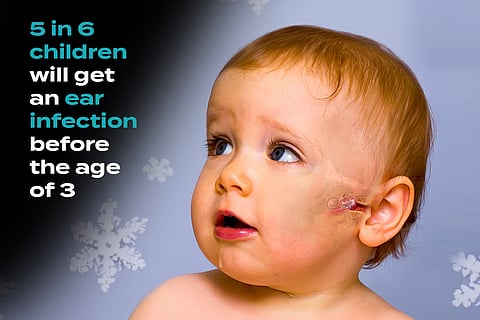
<p>Unfortunately, this is extremely common for babies and toddlers. According to the NIH, 5 in 6 children will experience an ear infection before their third birthday. This might elicit some panic from parents thinking that this could lead to hearing damage, but the good news is that most ear infections go away on their own, and stubborn ones are easy to treat.</p>
<figure><img alt="" height="388" src="https://cdn.storymd.com/optimized/JdPG6Mfjo3/original.jpg" width="584" />
<figcaption>What happens if my child keeps getting ear infections and can I prevent them? <em>Source: U.S. Navy photo by Mass Communication Specialist Seaman Apprentice Joshua Adam Nuzzo</em></figcaption>
</figure>
<p>Ear infections can be traced to both bacterial and viral sources, and they affect the middle ear. They’re often painful because of the pressure they load onto the tiny space between the eardrum and the back of the throat (eustachian tube).</p>
<p>In young kids, eustachian tubes are shorter, narrower, and more level, which makes it harder for fluid to drain out of the ear and easier for bacteria and viruses to travel from the throat to the middle ear. If the tubes become blocked with mucus, pressure builds up on the eardrum and you’re in for a nasty time. Ear composition is different in older children and adults: they may also get ear infections, but this is less common because their eustachian tubes are bigger and slanted, making it easier to drain fluid.</p>
<p>Children are more vulnerable to ear infections because their immune system isn’t as robust as that of adults, making it harder to fight infections. The adenoids, a part of the immune system located near the eustachian tubes, tend to be bigger in kids. Enlarged adenoids can contribute to blockages, trapping fluid and increasing the risk of infection.</p>
<p>Ear infections are usually caused by bacteria, beginning after a child has a sore throat or other upper respiratory infection. The bacteria then move from the upper respiratory tract into the middle ear, infecting the area and causing fluid to build up behind the ear drum. Ear infections can also be traced to viruses like colds since they cause bacteria to be drawn to the microbe-friendly environment, and from here, the bacteria progress to the middle ear as a secondary infection.</p>
<h2>Types of ear infections and how to spot one</h2>
<p>Ear infections come in three main types, each with its own combination of symptoms:</p>
<ul>
<li><strong>Acute otitis media</strong> (AOM). The most common type. Areas of the middle ear are infected and swollen and fluid becomes trapped behind the eardrum, causing pain. A fever is also possible.</li>
<li><strong>Otitis media with effusion</strong> (OME). Occurs after an ear infection has wrapped up but fluid has remained trapped behind the eardrum. Kids with OME may have no symptoms, but a doctor will be able to spot the fluid behind the eardrum with a special tool.</li>
<li><strong>Chronic otitis media with effusion</strong> (COME). This is when fluid remains in the middle ear for a long time or keeps returning even though there’s no infection. COME exacerbates new infections and also affects hearing.</li>
</ul>
<p>Since most ear infections happen before your kid reaches 3 years of age, they might not be able to communicate what’s wrong. Here are a few things to look out for instead:</p>
<ul>
<li>Pulling at the ear(s)</li>
<li>Being fussy </li>
<li>Crying</li>
<li>Irritability</li>
<li>Issues with sleeping</li>
<li>Fever </li>
<li>Fluid draining from the ear</li>
<li>Clumsiness/balance issues</li>
<li>Trouble hearing quiet sounds</li>
</ul>
<p>Immediate attention is required if a high fever, severe pain, or bloody or pus-like discharge from the ears is present.</p>
<h2>Ear infection treatments</h2>
<p>Ear infections aren’t fun for anyone, but they do go away on their own usually. The main factors to consider are the child’s age, the severity of pain, and the present symptoms.</p>
<p>If your child isn’t in severe pain, your doctor will most likely suggest waiting to see what happens for a few days before escalating treatment. Over-the-counter pain relief medication can be used to take things down a notch in the meantime.</p>
<figure><img alt="" height="388" src="https://cdn.storymd.com/optimized/8dn3Q2Svqn/original.jpg" width="586" />
<figcaption>Instilling ear medication <em>Source: British Columbia Institute of Technology (BCIT)</em></figcaption>
</figure>
<p>The reason why doctors might hold back on more heavy-handed treatment has to do with antibiotic resistance: using antibiotics may make future infections more difficult to defeat, and in many cases, they’re not even necessary in the first place. </p>
<p>Using caution with antibiotics is wise, but if your doctor does recommend going on an antibiotic, it will have to be taken over 7 to 10 days. Make sure you complete the full course with your child; stopping too soon could allow the infection to return.</p>
<h2>Stopping future infections</h2>
<p>We can’t bulletproof our kids when it comes to ear infections, but there are steps we can take to reduce the odds.</p>
<p>First up is vaccinating your child. Kids who are up to date with their vaccines experience fewer ear infections than their unvaccinated peers. PCV13 (13-valent pneumococcal conjugate vaccine) defends against 13 types of bacteria that cause infections.</p>
<p>Breastfeeding, if possible, is the optimal choice. Breast milk contains antibodies that can reduce the risk of ear infections (among many others). Regardless of whether you opt for formula or breastfeeding, ensure that your kid sits up during feeding as lying down makes it easier for milk or formula to flow into the eustachian tubes, raising the risk of infection. Don’t put your baby down for a nap with a bottle for the same reason.</p>
<p>Washing your hands protects against cold and flu, so keep your hands clean by washing them with soapy water and scrub them clean for 20 seconds every time. On the same note, stay away from those who are unwell, and don’t allow your kid to spend time with other kids who are sick.</p>
<p>Second-hand smoke has been shown to increase the odds of ear infections in kids three-fold. It’s another in a long list of reasons why you should quit if you smoke.</p>
<h2>…and if that fails</h2>
<p>Despite their parents’ best efforts, some children continue to get ear infections, perhaps as many as five or six a year. Your doctor may still recommend waiting for several months to see if things improve naturally, but if the infections are persistent and antibiotics won’t cut it, there’s a surgical procedure that may help. </p>
<p>It involves placing a small ventilation tube in the eardrum to boost airflow and stop fluid from building up in the middle ear. The tubes are typically left in there for six to nine months and require follow-ups until they fall out.</p>
<p>Failing the tubes, a more invasive measure of removing the adenoids to prevent infection may be called for. This will help to prevent the spread of infection to the eustachian tubes.</p>
<h2>More on Ear Infections</h2><ul><li><a href="https://soulivity.storymd.com/journal/yj5dgkktnm-ear-infections" target="_blank">Ear Infections (Otitis Media) in Children, Babies and Toddlers</a></li><li><a href="https://soulivity.storymd.com/journal/oja4p4p04j-colds-in-infants-and-children" target="_blank">Colds in Infants and Children</a></li><li><a href="https://soulivity.storymd.com/journal/bmpz95qu6j-ear-anatomy" target="_blank">Anatomy of the Ear</a></li></ul>
