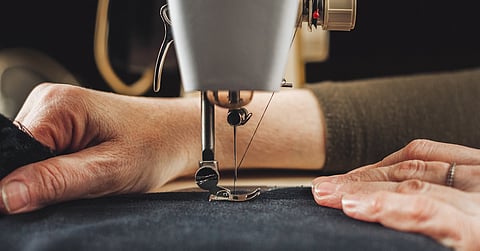

Starting your sewing journey feels exciting and maybe a little overwhelming. You sit down at your machine, see knobs, dials, and levers, and wonder where to begin. When you understand how your sewing machine works, you gain confidence, control, and creativity. You stop guessing and start creating with purpose. Let’s break it down so you can approach every project with clarity and excitement.
You don’t need to memorize every screw, but you should recognize the core components. Each part plays a specific role in forming clean, strong stitches.
Focus on these key elements:
Power switch and foot pedal – Control the machine’s speed and movement.
Spool pin – Holds your thread in place.
Tension dial – Adjusts how tightly the upper thread pulls.
Take-up lever – Moves thread through the machine as you stitch.
Needle and needle clamp – Pierce the fabric and secure the needle.
Presser foot – Holds fabric flat against the feed dogs.
Feed dogs – Grip and guide fabric under the needle.
Bobbin and bobbin case – Supply the lower thread.
When you recognize these parts, you eliminate confusion. You gain the ability to troubleshoot small issues instead of feeling stuck.
Your sewing machine creates a stitch by locking two threads together: the top thread and the bobbin thread. The needle carries the top thread down through the fabric. The bobbin thread loops around it underneath. The tension system controls how tightly those threads pull together.
If stitches look loose or uneven, check your threading first. Rethread the top thread completely. Make sure the presser foot stays raised while threading so the thread seats properly in the tension discs. Small adjustments create big improvements.
Most machines offer more than just a straight stitch. Even basic models include several practical options.
Common stitches include:
Straight stitch for seams and topstitching
Zigzag stitch for stretch fabrics and finishing edges
Buttonhole stitch for closures
Blind hem stitch for clean hems
Start simple. Practice on scrap fabric. Adjust stitch length and width so you can see how each setting changes the outcome. As you experiment, you develop control and precision.
Threading intimidates many beginners, but repetition builds skill quickly. Follow the threading path printed on your machine. Guide the thread through every marked point without skipping steps.
When winding a bobbin, place the thread securely through the bobbin hole and engage the bobbin winder. Keep the thread evenly distributed across the bobbin. Uneven winding can cause tension problems later.
Check that your bobbin sits correctly in its case and spins in the proper direction. A correctly inserted bobbin prevents jams and skipped stitches.
Tension determines stitch balance. If the top thread pulls too tightly, the fabric puckers. If the bobbin thread shows on top, the upper tension may sit too loose.
Turn the tension dial in small increments. Test each adjustment on scrap fabric before returning to your project. You don’t need to fear tension settings. You just need patience and practice.
As you begin exploring beginner sewing projects, you will encounter different fabrics that require slight tension adjustments. Cotton, denim, and knits all behave differently. Trust your ability to adapt.
You strengthen your sewing ability every time you sit at your machine. Practice sewing straight lines without guiding the fabric aggressively. Let the feed dogs move the fabric while you steer gently.
Clean your machine regularly. Brush out lint. Change needles often. Respect your equipment, and it will reward you with consistent performance.
When you understand your sewing machine, you stop feeling intimidated. You start feeling capable. You transform fabric into something functional and beautiful with your own hands. Keep learning, keep practicing, and let your creativity lead the way.

